🔓 Apps built with AI are leaking customer data
Researchers found thousands of sites built with an AI app builder handing database records to any visitor, no login needed.
Four-minute read. In today’s issue: AI-built apps leaking customer data, Microsoft 365 back after a worldwide outage, Shopify’s Shop channel opening to more stores, HubSpot’s promise of simpler pricing, and a film about hydrogen made by a model called Hydrogen.
SECURITY
Thousands of apps built with an AI app builder hand customer data to anyone who asks
What changed. Crissy Field, a Hamburg company working with the German newspaper Handelsblatt, examined 159,041 projects built with Lovable, a tool that turns a typed description into a working app. It found 24,664 websites sending database records to any visitor, with no login.
What it means for you. An app built by describing it to an AI can look finished and still leave its customer list open. The exposed records included more than 200,000 chat messages and over 1,000 records with passport details.
The first step. Open your own app in a private browser window this week, without logging in, and click through every page. Any customer record you can see there, a stranger can see too.
The limitation. The report is undated and names no single cause, only repeated mistakes in who may read the database. Email addresses turned up on 30% of the exposed sites, which the authors say is not a confirmed leak rate. It reports no response from Lovable.
Crissy Field on data exposed by Lovable-built apps (crissyfield.de)
Microsoft 365 is back after an outage that stalled businesses worldwide
Microsoft says access to its software is fully restored, ending an outage on 13 November that stalled government offices, traders and businesses around the world.
Its service status page now reads “All products are operational”, and the backlog of delayed email has been processed.
Check Friday’s inbox for late arrivals. Then agree one fallback for next time: a group chat outside Microsoft, and a printed list of client phone numbers.
The Edge Singapore on Microsoft restoring its services (theedgesingapore.com)
Just shipped
Shopify’s Shop app and Shop.com now list stores that do not use Shopify Payments. Since 10 November, any store that meets Shop’s eligibility requirements can appear, and may start receiving shoppers referred from Shop.
Stores without Shopify Payments still cannot run Shop Campaigns. Open the Shop channel in your Shopify admin to see whether your store qualifies and what to fix. (changelog.shopify.com)
The rest of the day
🧑💼 Perplexity’s Teammates, AI agents that take on research, customer service and QA work, now run in the Perplexity Mac app. Max subscribers only. (perplexity.ai)
↩️ Shopify stores can now switch self-serve returns and cancellations on or off for each market they sell in, instead of one setting for the whole store. (changelog.shopify.com)
💱 A custom discount on a Shopify draft order now applies in the currency the customer sees. Check the totals on draft orders you send to overseas buyers. (changelog.shopify.com)
🔐 Shopify’s admin now shows what each installed app can access, under Settings > Apps, with permissions that may include sensitive data labelled. Review the list this week and remove any app you no longer use. (changelog.shopify.com)
🛠️ Built with AI
Pieter Levels loaded the entire IKEA catalogue into Interior AI as 3D furniture. Upload a floor plan or a walkthrough video, it rebuilds the home, and you redecorate it. A furniture shop or home stager could let customers try real pieces in their own rooms the same way. (x.com)
🧰 The Open Source Toolshed
What it is. Pinokio is a free desktop app that installs and runs open-source AI projects on your own computer with one click.
Who it’s for. An owner who wants to try free AI tools without a terminal, and without sending files to an online service.
How hard it is. Download the installer for Mac, Windows or Linux. Install only the vetted tools on its Discover page, because a Pinokio script can run any command on your computer.
MIT licence. (github.com)
📈 The AI Odometer
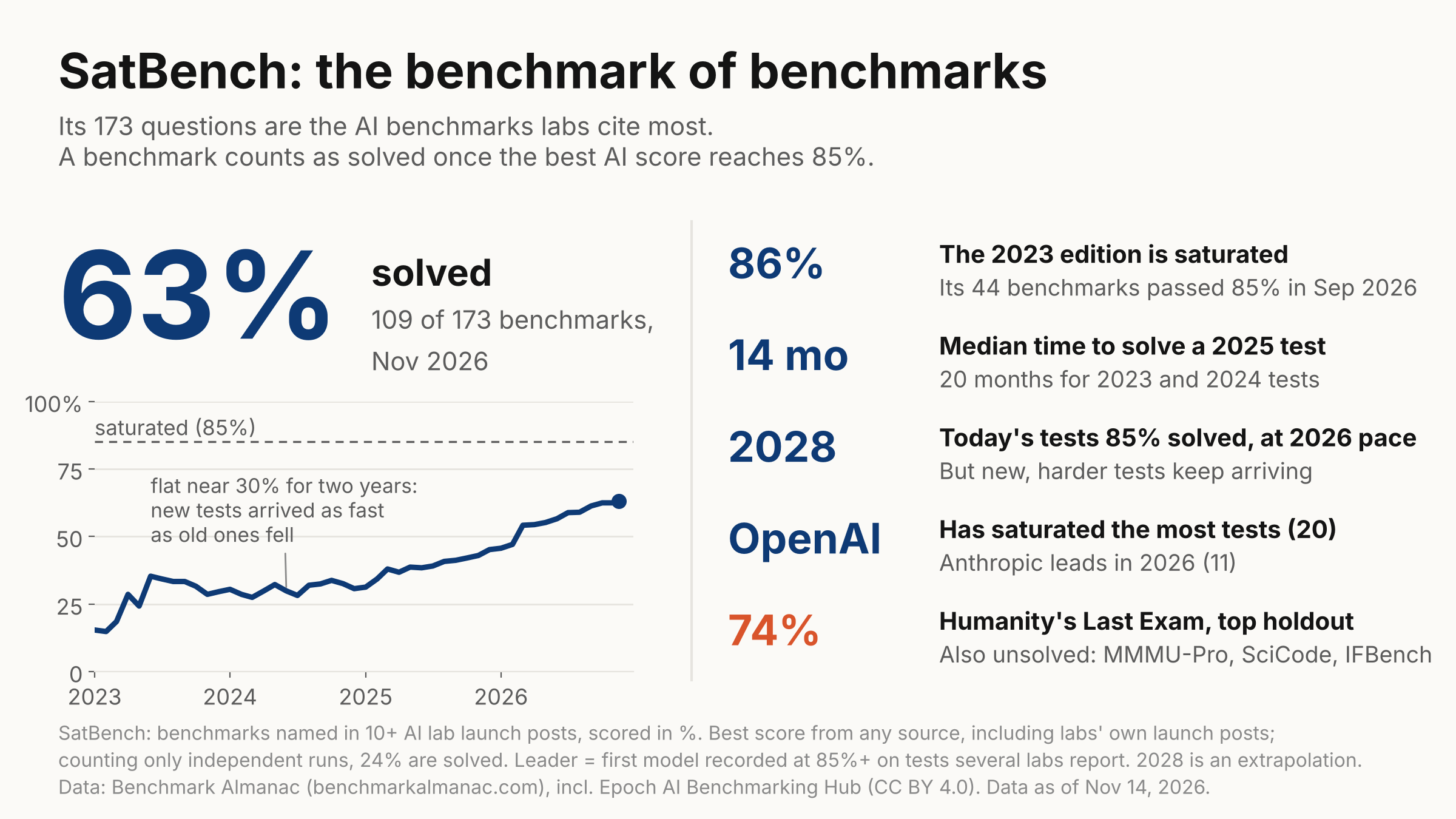
Source: Ethan Mollick’s SatBench on GitHub, data as of 14 November 2026, built on Brian Zhou’s Benchmark Almanac.
SatBench stands at 63%: 109 of its 173 benchmarks are solved.
What it means for you. The tests AI labs quote in their launch posts are mostly beaten already, and counting only independent runs the figure is 24%. Skip the launch scores: give a new model one job your team does every week and judge it on that.
Too early
HubSpot co-founder Dharmesh Shah says the company will “simplify pricing considerably”, so that price rises with usage, and lean harder on its connectors for Claude and ChatGPT. Brian Halligan returned as chief executive on 12 November. No new price list or date has been published, so nothing changes on your bill yet. (x.com)
🎈 One for the road
Google gave its new Gemini 4 Hydrogen model a custom skill and a short brief, and asked for a sizzle reel.
The subject: hydrogen, the element. The model found public-domain archive footage, cut it into one continuous edit and added the narration.
A model named after the lightest element, making a film about its namesake.