Meta's new AI agent is built for small businesses
Muse for Small Business connects to QuickBooks, Shopify and Stripe and drafts the work for you to approve.
Four-minute read. In today’s issue: Meta’s AI agent built for small businesses, Airtable raising automation limits on every plan, branded captions in Google Vids, three Google updates worth your time, what an hour of AI agent work costs, and an AI that writes LEGO instructions.
AGENTS
Meta’s Muse agent now works for small businesses
What changed. Meta launched Muse for Small Business on 29 September in the US and Canada. You give it a goal, such as finding new customers, and it works on it in the background.
What it means at your size. It connects to tools many small teams already use, including QuickBooks, Shopify, Stripe, Canva, Slack and Zoom, plus your Facebook and Instagram business accounts. Meta says it can review sales and campaigns, help with cash flow and inventory, and draft customer messages and ads.
The first step. Connect one tool you trust, such as your accounting or store, and ask Muse for a one-page summary of last month. Judge the output before you connect anything else.
The limitation. It isn’t available outside the US and Canada yet. Meta says it won’t post, send or buy anything without your approval, and the heavier features need a paid plan.
Meta’s announcement of Muse for Small Business (about.fb.com)
WORKFLOWS
Airtable raised automation limits on every plan
What changed. Airtable lifted the cap on automations from 50 per base on every plan to 75 on Free, 100 on Team, 150 on Business and 200 on Enterprise, its community team posted on 2 October.
What it means at your size. Automations can now delete records and compare two date fields directly, with no script needed. A counter shows how many automations you have left.
The first step. Before you build your next automation on a third-party platform, try building it in Airtable directly. With the higher limits, there’s now more room to keep it all in one place.
The limitation. Monthly run limits haven’t changed, so a busy automation can still hit your plan’s ceiling.
Airtable’s automations update (community.airtable.com)
Affiliate link: we may earn a commission if you sign up, at no cost to you.
Just shipped
Google Vids captions now match your brand. Google’s 2 October Workspace recap says captions in Vids are now fully customisable: font, position on screen and animation.
AI voiceovers and avatar narration in Vids also moved to Google’s newer Gemini text-to-speech model, which Google says sounds more natural.
If you make short training or promo videos in Workspace, set your caption style once and reuse it. (workspaceupdates.googleblog.com)
The rest of the day
📋 Google’s September catch-up. Google listed every AI update it announced in September; see the full list for the rest. Three worth your time:
More apps inside Gemini. Airtable, monday.com and PandaDoc now connect to the Gemini app, so you can ask Gemini to work with them directly.
Talk to Gmail, Docs and Keep. Gemini’s faster voice model now works in Workspace, so you can get things done by speaking instead of typing.
Gemini on Windows. Press Alt + Space to open Gemini over whatever you’re working on, and have it pull from your Gmail and files.
🧭 The holdup isn’t awareness. Ethan Mollick argues leaders already understand AI; what’s slow is changing how the company works. If adoption feels stuck at your business, look at process first. (x.com)
🛠️ Built with AI
Peter Yang used Claude to rebuild the core features of a paid research tool he already subscribes to, in one sitting. If a single-purpose SaaS tool is eating into your budget, try asking Claude to build the one feature you actually use before you renew. (x.com)
🧰 The Open Source Toolshed
What it is. A short prompt, inspired by a guide from the solo-ops account Zephyr, that asks Claude or ChatGPT to audit how you’ve been using it.
Who it’s for. Any owner who has handed tasks to AI and isn’t sure it’s paying off.
How to use it. Paste this in: “Here’s what I’ve used you for this week: [list the tasks]. Be honest: which of these actually saved me time, and which just felt productive?”
It’s free to copy and adapt, with nothing to install. (x.com)
📈 The AI Odometer
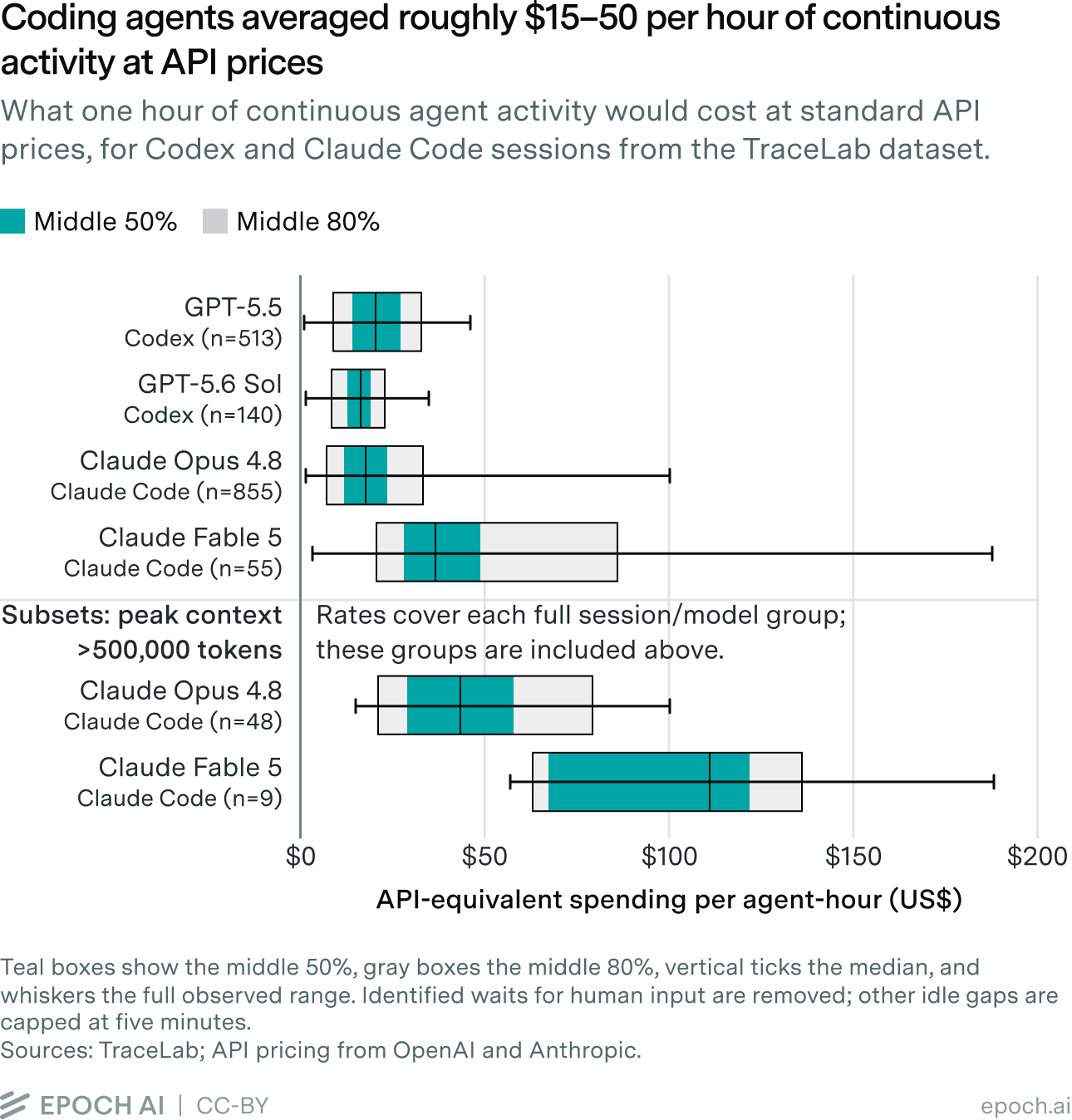
Source: Epoch AI, “How many AI agents could we run?”, 2 October 2026. Licensed CC BY.
Hourly agent spending varies substantially across models.
Epoch measured what one hour of an AI agent working nonstop costs at standard prices: roughly $15 to $50, depending on the model. Compare that with the hourly cost of the person who does the same task today before you decide what to hand over.
Too early
Google is taking pre-orders for Googlebook, a laptop built around Gemini that works with your Android phone out of the box. It hasn’t shipped, and Google hasn’t published a price or ship date on its roundup, so there’s nothing to buy yet. (blog.google)
🧱 One for the road
A Show HN project called ldraw-nova has ChatGPT or Claude write LDraw code, the file format that turns a text prompt into real, buildable LEGO instructions. Describe a spaceship and get brick-by-brick steps back. An AI chat window moonlighting as a tiny CAD tool. (github.com)